Archistory
HomeArchiveTime
Search
中文EN日本語

Archive

ArchitectsBuildingsTime

Periods

Classical EraMedievalRenaissanceBaroqueNeoclassicalIndustrial Revolution

Styles

Classical ArchitectureRenaissance ArchitecturePalladianismBaroque ArchitectureEnglish BaroqueMannerism

Search

Search architects or buildings...

Archistory © 2026
Archistory

Home/Architects/Antoni Gaudí

Antoni Gaudí

Portrait of Antoni Gaudí, 1878

Portrait of Antoni Gaudí, 1878

Pau Audouard · Public Domain · Source

Antoni Gaudí (1852–1926) fused structural logic with organic form to create an unprecedented architectural language. His seven World Heritage sites in Barcelona draw pilgrims of architecture, and the unfinished Sagrada Família still rises — as Gaudí believed, his "client is not in a hurry."

Life span1852 – 1926Nationality / Region西班牙StyleCatalan Modernisme, Art NouveauEducation巴塞罗那建筑学院
Catalan ModernismeArt Nouveau
Portrait of Antoni Gaudí, 1878

Portrait of Antoni Gaudí, 1878

Pau Audouard · Public Domain · Source

Ideas

01

Nature as the only teacher — structural laws drawn from bones, caves, and trees, not from historical styles

02

Architecture as total art — everything from structure to door handle is designed by the architect

03

Geometric imagination — catenary arches, hyperboloids, and ruled surfaces shape space without relying on Gothic columns

04

Dignity of material and craft — trencadís mosaics, wrought iron, and stone masonry each speak their own language

Architect dossier

03

01 / 03

Learning structure from nature

Gaudí did not start from architectural history textbooks. He observed how branches fork, how bones bear weight, how caves cantilever. In the Sagrada Família workshop, he built an inverted catenary model — strings and small sandbags simulating vault stresses, then flipped to reveal the optimal compression curve. The method bypassed complex mathematics, deriving form directly from gravity.

This "natural structuralism" reached its first peak in the crypt of Colònia Güell. Slanted columns branch like tree trunks, brick alternates with basalt — the space is at once a structural laboratory and a place of prayer. Gaudí proved that structural efficiency and spatial poetry are not contradictory; they can emerge from the same natural law.
02 / 03

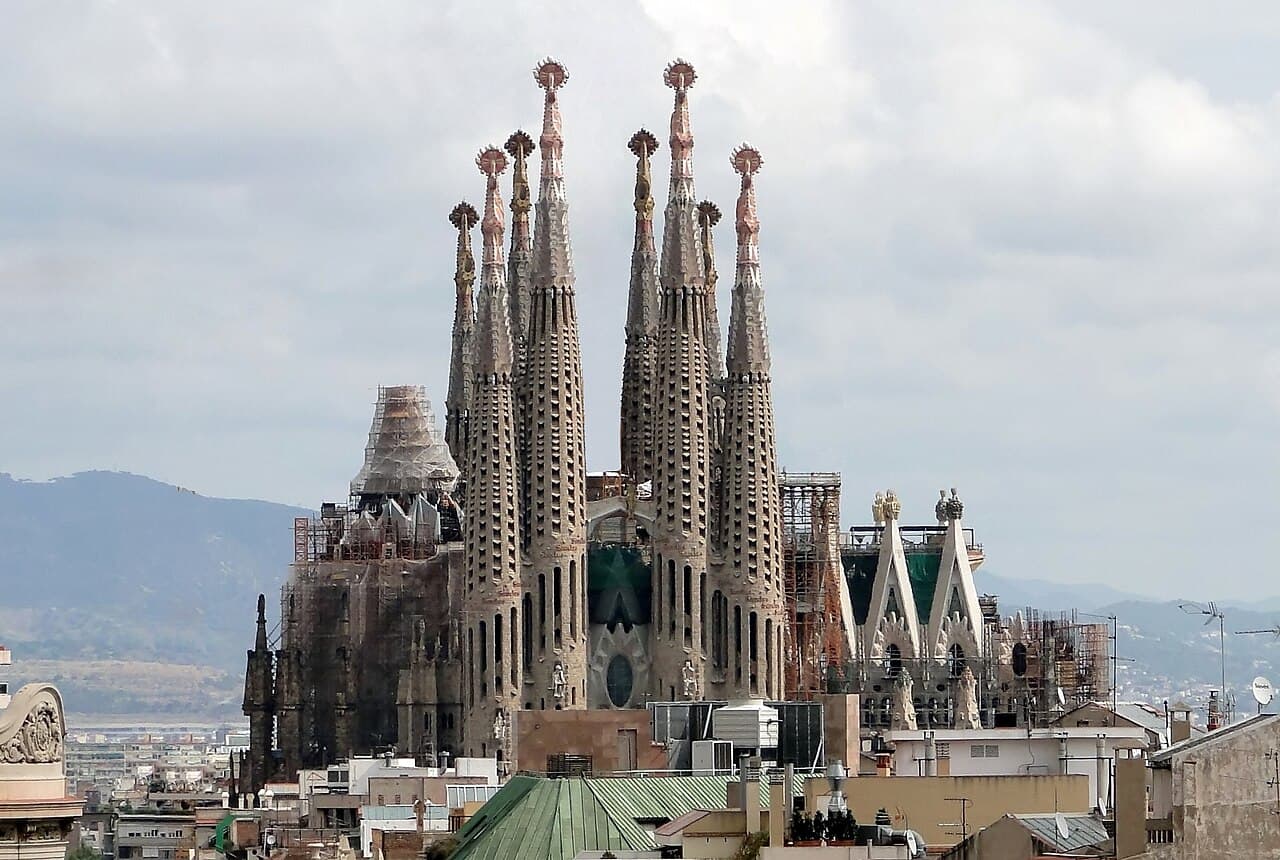
Sagrada Família: A life's work

In 1883, the 31-year-old Gaudí took over the Sagrada Família. For the next 43 years he poured himself into this expiatory church, living on-site for the final 12. Gaudí knew he wouldn't see it finished, so he left detailed plaster models and geometric drawings for successors to follow.

The design evolved from neo-Gothic into Gaudí's own "natural Gothic." The Nativity façade teems like a tree of life; the Passion façade is stark as bare bone. Inside, forest-like columns branch overhead; the central tower will reach 172.5 meters — slightly lower than Barcelona's Montjuïc hill, because Gaudí believed "the work of man should not surpass the work of God."

Construction continues today, with the main structure expected to be completed in 2026 — the centenary of Gaudí's death. The building has become architecture's most enduring creative act and its most moving testament to the aesthetics of the unfinished.

03 / 03

The poetics of material and the urban house

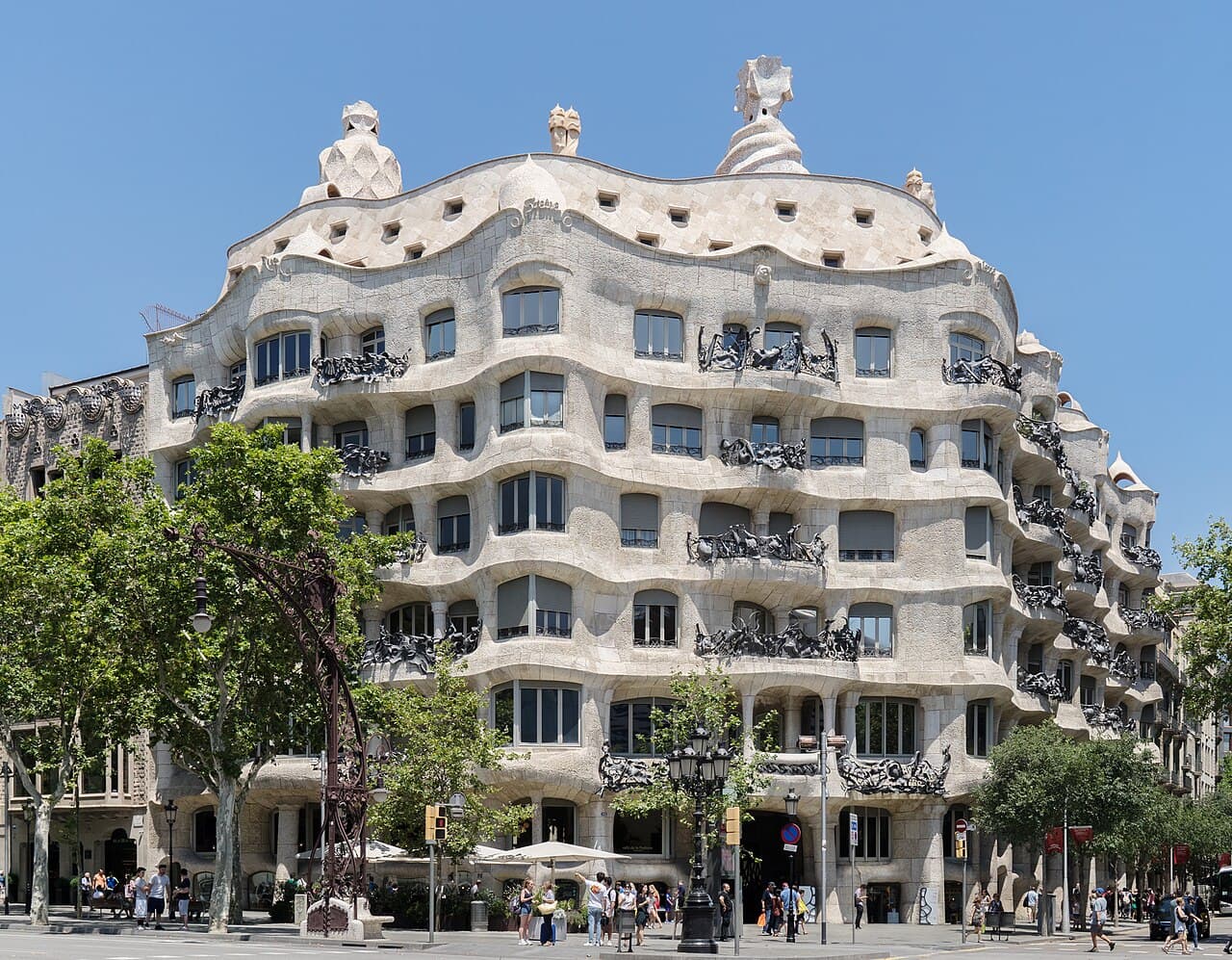
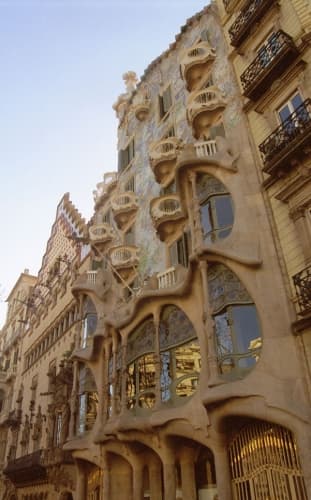
Gaudí's genius is equally visible in housing and urban space. Casa Batlló's façade evokes dragon scales and bones, its roof a dragon's spine — the legend of Saint George and the dragon becomes architecture. Casa Milà's undulating stone walls and sculptural chimneys turn an apartment block into habitable sculpture. Park Güell's kaleidoscopic mosaic bench and gingerbread gatehouses, originally a garden-city project, became one of the world's most joyful public spaces.

Gaudí's palette comes almost entirely from material itself: colored ceramic shards (recycled from factory waste), limestone, basalt, iron. He let materials speak, unadorned, unpretending. Trencadís is both a continuation of Mediterranean mosaic tradition and an early practice of resource reuse. Each shard's position was decided on-site by craftsmen, giving Gaudí's architecture both grand geometric order and improvisational handmade warmth.

Sections

  1. 01Learning structure from nature
  2. 02Sagrada Família: A life's work
  3. 03The poetics of material and the urban house

Reading the works

Sagrada Familia

Sagrada Familia

巴塞罗那, 西班牙 · 1882

An unfinished masterpiece to which Gaudí devoted 43 years — the ultimate fusion of Gothic and organic form.

Sagrada Familia→
Casa Batlló

Casa Batlló

巴塞罗那, 西班牙 · 1906

A skeletal façade and dragon-spine roof that turn Catalan legend into habitable poetry.

Casa Batlló→
Casa Milà (La Pedrera)

Casa Milà (La Pedrera)

巴塞罗那, 西班牙 · 1912

Undulating stone façade and sculptural chimneys — the apartment building nicknamed "the quarry."

Casa Milà (La Pedrera)→

Sources

  • Encyclopaedia Britannica: Antoni Gaudí
  • Wikidata: Antoni Gaudí
  • UNESCO: Works of Antoni Gaudí
  • Sagrada Família Foundation

Related Architects

Influenced by

Francesco Borromini

1599–1667 · 巴洛克

Works

5 buildings

1882Sagrada Familia巴塞罗那, 西班牙
1890Palau Güell巴塞罗那, 西班牙
1906Casa Batlló巴塞罗那, 西班牙
1912Casa Milà (La Pedrera)巴塞罗那, 西班牙
1914Park Güell巴塞罗那, 西班牙

All works

Casa Batlló

Casa Batlló

巴塞罗那, 西班牙 · 1906

Casa Milà (La Pedrera)

Casa Milà (La Pedrera)

巴塞罗那, 西班牙 · 1912

Palau Güell

Palau Güell

巴塞罗那, 西班牙 · 1890

Park Güell

Park Güell

巴塞罗那, 西班牙 · 1914

Sagrada Familia

Sagrada Familia

巴塞罗那, 西班牙 · 1882

Continue Exploring

Influenced by

Francesco Borromini1599 – 1667

Related Buildings

Carson Pirie Scott Building芝加哥, 美国, 1904