Archistory
HomeArchiveTime
Search
中文EN日本語

Archive

ArchitectsBuildingsTime

Periods

Classical EraMedievalRenaissanceBaroqueNeoclassicalIndustrial Revolution

Styles

Classical ArchitectureRenaissance ArchitecturePalladianismBaroque ArchitectureEnglish BaroqueMannerism

Search

Search architects or buildings...

Archistory © 2026
Archistory

Home/Architects/Kunio Maekawa

Kunio Maekawa

Portrait of architect Kunio Maekawa

Portrait of architect Kunio Maekawa

Kunio Maekawa marks the turning point where Japanese modern architecture moved from imitation to confidence. As Le Corbusier’s first Japanese apprentice in Paris, he not only brought the language of modernism back to Japan but catalyzed the entire lineage of postwar Japanese architecture from Kenzo Tange to Fumihiko Maki. His Tokyo Bunka Kaikan is a milestone of Japanese modernism.

Life span1905 – 1986Nationality / RegionJapan
Portrait of architect Kunio Maekawa

Portrait of architect Kunio Maekawa

Ideas

01

Modernism is not a European monopoly — it can and should be adapted to suit Japan’s climate, materials, and culture

02

Architecture is the practice of social responsibility; public cultural buildings especially should be generously open to citizens

03

Concrete is not a negation of tradition but can be combined with the spatial logic of traditional Japanese timber construction

04

Technology and humanity are not opposites — good architecture should satisfy both engineering rationality and human sensibility

05

Architects must attend to the whole city, not just individual buildings — Maekawa was among the first in Japan to practice comprehensive urban design

Architect dossier

03

01 / 03

Corbusier’s Japanese Disciple: The Modernist Relay from Paris to Tokyo

Kunio Maekawa was born in Niigata in 1905 and, after graduating from Tokyo Imperial University’s architecture department in 1928, traveled to Paris to become Le Corbusier’s first Japanese apprentice. He worked in Corbusier’s office for two years (1928–1930), participating in parts of classic projects such as the Villa Savoye. This experience decisively shaped his life — he not only learned the “language” of modern architecture but grasped the entire intellectual system behind it concerning society, technology, and the city.

After returning to Japan in 1930, Maekawa worked in Antonin Raymond’s office before establishing his own practice in 1935. Early works — such as the Maekawa House (1942) — attempted to combine Corbusier’s modernist grammar with traditional Japanese spatial concepts. During the war, architectural activity in Japan largely halted, but this paradoxically gave Maekawa and his generation a period for reflection and absorption. After the defeat of 1945, Japan entered an era of reconstruction, and Maekawa’s golden period began.

Maekawa was not only an outstanding architect himself but a key node in the genealogy of Japanese modern architecture. Kenzo Tange attended Maekawa’s return lecture at Tokyo Imperial University and later worked in Maekawa’s office for four years (1938–1941). One could say the line Corbusier → Maekawa → Tange → Isozaki/Maki constitutes one of postwar Japanese architecture’s most important lineages of transmission. Maekawa’s role was the first “Japanization” link in this chain.

02 / 03

Tokyo Bunka Kaikan and the Japanese Expression of Concrete

Tokyo Bunka Kaikan (1961) is Maekawa’s culminating work and a milestone in the history of Japanese modernist architecture. This performing arts center in Ueno Park demonstrates Maekawa’s mature language through its enormous cantilevered roof, zigzag façade, and superb concrete craftsmanship. It is no simple copy of Corbusier — Maekawa introduced the proportional sensibility and delicate texture of traditional Japanese timber construction into concrete surfaces, creating a distinctive “Japanese Brutalism.”

Maekawa’s approach to concrete is highly distinctive. Rather than pursuing Corbusier’s raw beton brut, he experimented extensively with formwork and release agents so that the concrete surface acquired a warm, tactile quality. Combined with precise proportional control and the rhythmic articulation of horizontal and vertical members, his buildings conceal the restraint and tranquility characteristic of Japanese architecture beneath a Brutalist exterior.

In spatial organization too, Maekawa displayed the wisdom of traditional Japanese space. The foyer of Tokyo Bunka Kaikan is not a passive transitional space but a multi-layered social arena where cascading balconies, stairs, and bridges fill the space with vertical fluidity and visual connections between people. The main concert hall embodies an extreme pursuit of acoustic performance — Maekawa invited the finest acoustical experts of the day to collaborate, and the hall remains one of Tokyo’s best venues for classical music.

03 / 03

Hiroshima and Peace: The Civic Responsibility of a Public Architect

The Hiroshima Peace Memorial Museum competition (1951–1955) was the most symbolically charged project of Maekawa’s career. Though the final built design was led by Kenzo Tange, Maekawa, as a juror and participant in early proposals, made important contributions to this landmark of international significance. Subsequently, Maekawa completed a series of peace-related public buildings in Hiroshima — the Hiroshima Peace Memorial Cathedral (1954, no longer extant), Hiroshima City Auditorium (1955), and others — works that fused the language of modern architecture with an appeal for peace.

Kunio Maekawa was a resolutely “public” architect. Most of his significant works are public cultural facilities: museums, concert halls, libraries, government buildings. He believed the architect’s primary responsibility was not to serve private capital but to create better shared spaces for citizens. This public-oriented ethos held particular significance in Japan’s postwar democratization process — new public buildings symbolized a new civil society.

Methodologically, Maekawa was among the first Japanese architects to practice “integrated design.” He was deeply involved not only in the building itself but also in the design of furniture, signage, landscape, and even urban planning. Projects such as Saitama Hall (1966) and the National Museum of Western Art (realized in collaboration with Le Corbusier, completed 1959) demonstrate his control over the “total environment.” He died in 1986 at 81. His life spanned Japan’s entire transformation from prewar imperialism to postwar economic miracle, and his architecture faithfully records that history.

Sections

  1. 01Corbusier’s Japanese Disciple: The Modernist Relay from Paris to Tokyo
  2. 02Tokyo Bunka Kaikan and the Japanese Expression of Concrete
  3. 03Hiroshima and Peace: The Civic Responsibility of a Public Architect

Reading the works

Tokyo Bunka Kaikan

Tokyo Bunka Kaikan

1961

A concrete masterpiece in Ueno Park, its enormous cantilevered roof spreading like a bird in flight — one of Japanese modernism’s most monumental public buildings.

Tokyo Bunka Kaikan→
National Museum of Western Art

National Museum of Western Art

1959

A Tokyo museum completed in collaboration with Le Corbusier, the architectural crystallization of the master-disciple relationship and a window through which Japan understood Western modernism.

National Museum of Western Art→
Fukuoka Art Museum

Fukuoka Art Museum

1979

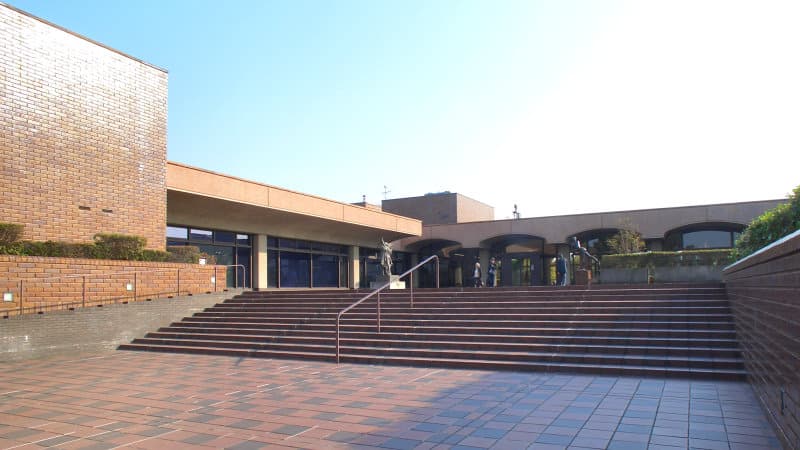
A late-career masterwork, with horizontally extending volumes and an inward-facing courtyard revealing Maekawa’s final understanding of “Japanese modern.”

Fukuoka Art Museum→

Sources

  • Tokyo Bunka Kaikan Official Site
  • Maekawa Kunio — Docomomo Japan
  • Wikidata: Kunio Maekawa

Works

30 buildings

1913Museum of East-Asian Art
1921Saitama Museum of Natural History
1926Tokyo Metropolitan Art Museum
1942Kunio Maekawa House
1952The National Museum of Modern Art, Tokyo
1954NHK Fujimigaoka Clubhouse
1957Okayama Prefectural Government Building
1958Hirosaki City Hall
1959National Museum of Western Art
1961Hayashibara Museum of Art
1961Tokyo Bunka Kaikan
1964Hirosaki Civic Hall
1966Saitama Hall
1971Saitama Prefectural Museum of History and Folklore
1976Kumamoto Prefectural Museum of Art

All works

Saitama Museum of Natural History

Saitama Museum of Natural History

1921

NHK Fujimigaoka Clubhouse

NHK Fujimigaoka Clubhouse

1954

Hirosaki City Hall

Hirosaki City Hall

1958

Saitama Hall

Saitama Hall

1966

Saitama Prefectural Museum of History and Folklore

Saitama Prefectural Museum of History and Folklore

1971

Kumamoto Prefectural Theater

Kumamoto Prefectural Theater

1982

Ongakudō

Ongakudō

Kumamoto Prefectural Museum of Art

Kumamoto Prefectural Museum of Art

1976

Rohm Theatre Kyoto

Rohm Theatre Kyoto

Museum of East-Asian Art

Museum of East-Asian Art

1913

Miyagi Museum of Art

Miyagi Museum of Art

1981

The National Museum of Modern Art, Tokyo

The National Museum of Modern Art, Tokyo

1952

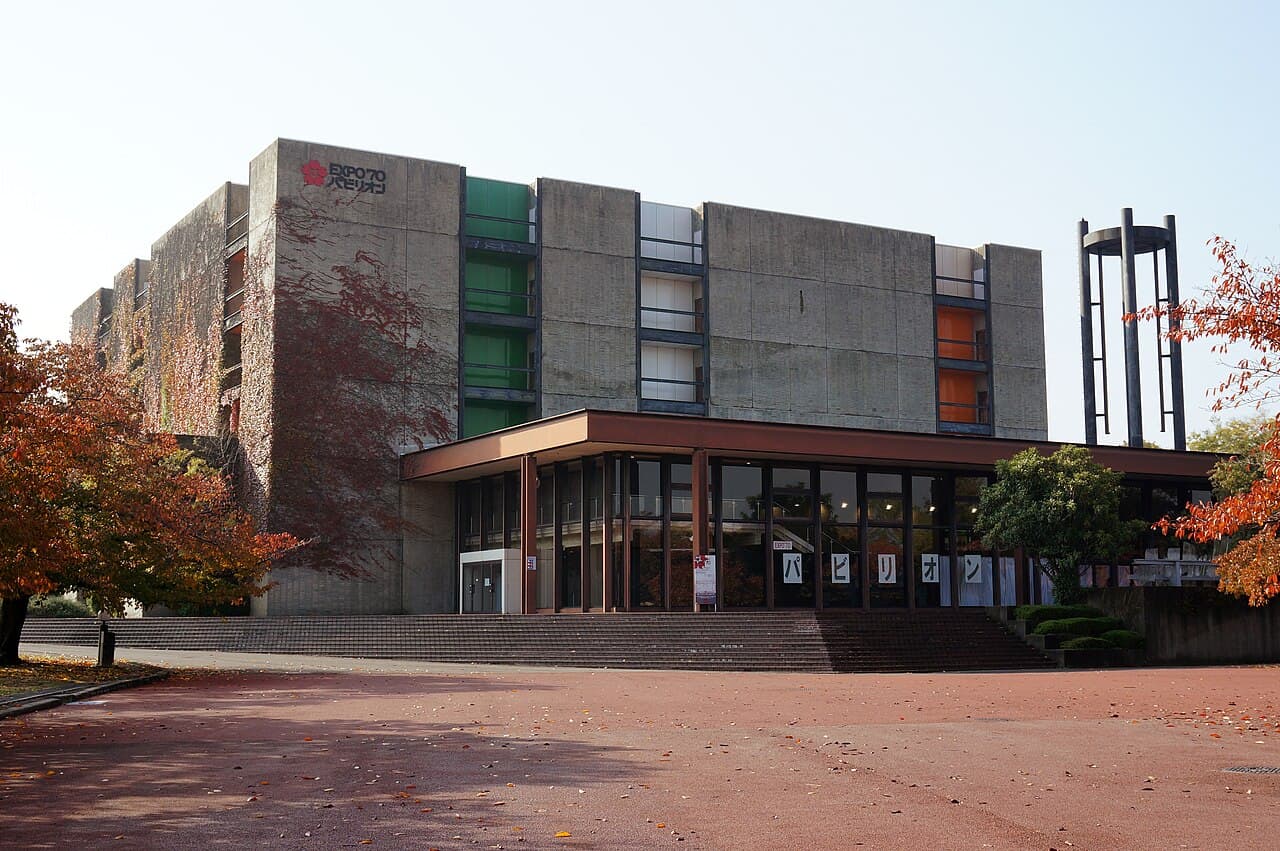
Expo '70 Pavilion

Expo '70 Pavilion

Kinokuniya Hall

Kinokuniya Hall

Untitled

Untitled

Hayashibara Museum of Art

Hayashibara Museum of Art

1961

Hachirō Yuasa Memorial Museum

Hachirō Yuasa Memorial Museum

Hirosaki Civic Hall

Hirosaki Civic Hall

1964

Kunio Maekawa House

Kunio Maekawa House

1942

Louise-Catherine

Louise-Catherine

Tokyo Metropolitan Art Museum

Tokyo Metropolitan Art Museum

1926

Yamanashi Prefectural Museum of Art

Yamanashi Prefectural Museum of Art

Ishigaki Civic Hall

Ishigaki Civic Hall

1985

Niigata City Art Museum

Niigata City Art Museum

1985

Fukuoka Art Museum

Fukuoka Art Museum

1979

National Museum of Western Art

National Museum of Western Art

1959

Tokyo Bunka Kaikan

Tokyo Bunka Kaikan

1961

Okayama Prefectural Government Building

Okayama Prefectural Government Building

1957

Hirosaki City Museum

Hirosaki City Museum

1977

Setagaya City Local Museum

Setagaya City Local Museum