01 / 03
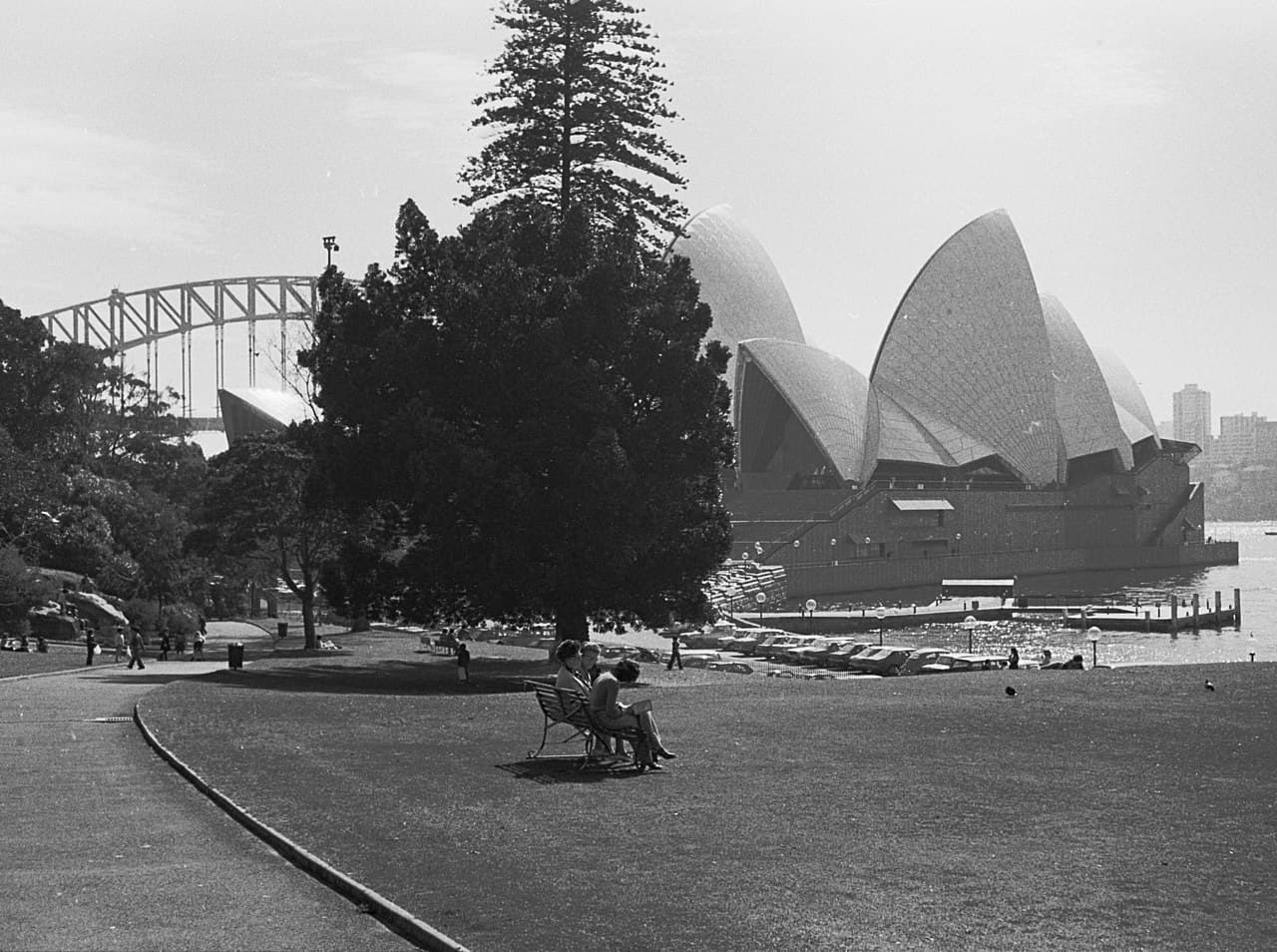
The Sydney Opera House: Architecture for a nation
In 1957, the 38-year-old Utzon won the commission for the Sydney Opera House in an anonymous international competition, defeating over 200 entries. His scheme did not even meet the competition's technical requirements — the drawings were more sketches than construction documents — but jury chair Eero Saarinen was won over by its sculptural power: "It must be built."
Yet the journey from drawing to completion took 16 years (1957–1973), filled with near-engineering-impossibilities. The thin-shell roofs Utzon proposed had no precedent: how could concrete be cast into such enormous free-form surfaces? Utzon's team with Ove Arup spent years before discovering that all shells could be derived from the surface of a single sphere — a geometric insight that made prefabrication possible. But in 1966, under political pressure and budget overruns, Utzon was forced off the project and never saw his masterpiece complete. He never returned to Australia.
The tragedy of the Sydney Opera House is this: it is one of the 20th century's greatest buildings, completed at the cost of its architect's expulsion. When Utzon received the Pritzker Prize in 2003, the jury specifically cited how the building "changed the image of an entire country." In 2007, the Opera House was inscribed as a World Heritage Site — Utzon became one of the very few architects to see their work receive this honor during their lifetime.